Window screen replacement in San Diego costs about $20 to $40 per standard screen for rescreening (new mesh, same frame) and $50 to $120 per screen if you’re replacing the full frame too. Sliding door screens run $35 to $75 to rescreen and $80 to $150 for a new unit. Most San Diego homeowners only need rescreening, not a full replacement. Here’s how to read which is which, what drives the cost, and where San Diego conditions change the math.
Rescreen vs. full replacement: what’s actually different
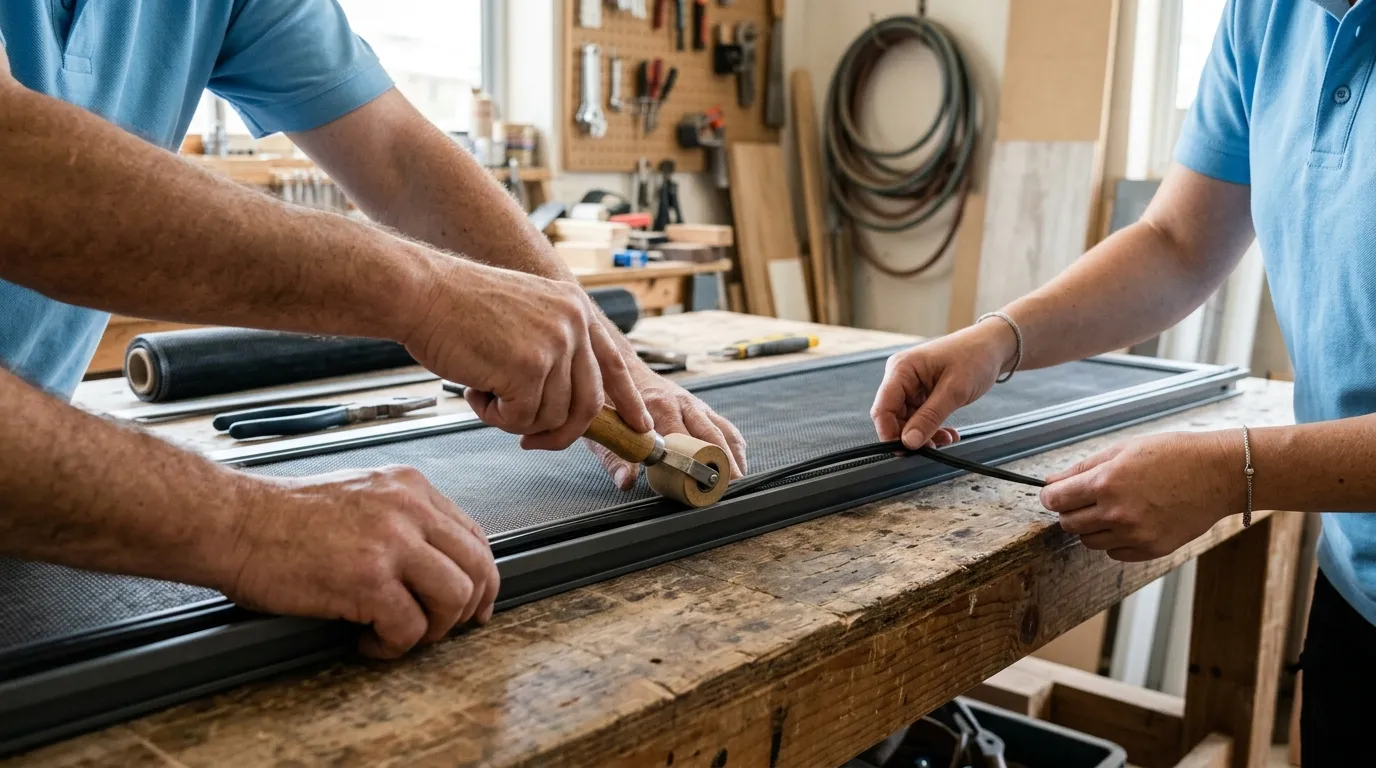
Rescreening means pulling the old mesh out of an existing frame, pressing in new mesh and spline, and trimming it flush. The frame stays. This is the right call for most damaged screens, because aluminum screen frames hold up for decades. The mesh is what fails.
Full replacement means the entire unit goes: frame, mesh, hardware, and all. You pay more, but sometimes it’s the right call. Sun-rotted or badly bent frames, frames that no longer seat in the track, or very old frames on a coastal home where salt has pitted the aluminum for 20-plus years are the cases where replacing the whole unit makes more sense than rescreening into a compromised frame.
The difference in cost is real. Rescreening a standard window screen runs $20 to $40. A new full-unit standard screen runs $50 to $120 installed. For a sliding door screen, rescreening is $35 to $75 and a full new unit lands at $80 to $150. If you have a home with 12 screens and only the mesh is shot, rescreening instead of full replacement saves you several hundred dollars.
What window screen replacement costs in San Diego
Prices vary by screen size, mesh type, and whether you’re replacing just the mesh or the full frame. Here’s an honest breakdown for San Diego County.
| Screen type | Rescreen (mesh only) | Full unit replacement |
|---|---|---|
| Standard window screen | $20 to $40 | $50 to $120 |
| Sliding door screen | $35 to $75 | $80 to $150 |
| Sun or solar screen | $45 to $90 | $90 to $180 |
| Pet-screen mesh upcharge | Add $10 to $20 per screen | Add $15 to $30 per screen |
| Oversized or custom screen | Quote-based | Quote-based |
A few things push you toward the high end. Coastal homes in La Jolla, Del Mar, Pacific Beach, and Carlsbad often have aluminum frames that have taken years of salt air. If the frame is pitted, chalky, or bent out of square, a full replacement is the smarter spend. Sun-rotted fiberglass mesh on a south or west-facing window in Escondido, El Cajon, or Santee is a rescreen job since the frame is usually fine. You’re just replacing brittle mesh.
Standard screen vs. solar screen vs. pet screen: which mesh to buy
Not all replacement mesh is the same, and San Diego homeowners have a few real reasons to upgrade when rescreening.
Standard fiberglass mesh is the default and works for most windows. It’s the cheapest option and handles normal wear well. The downside in San Diego is that fiberglass degrades faster on south and west exposures. The UV load in inland San Diego counties is high, and standard mesh gets brittle and punches through easily after five to ten years of full sun.
Solar or sun screens use a tighter, heavier mesh that blocks 65 to 90 percent of solar heat and UV before it reaches the glass. For west-facing windows in Chula Vista, El Cajon, Santee, or any inland zip code where afternoon heat is a real issue, solar screens reduce cooling load noticeably. They also protect furniture and flooring from UV fading. The tradeoff is reduced visibility and a darker interior look. Cost to rescreen with solar mesh runs $45 to $90 per screen, which is meaningfully more than standard, but many homeowners recoup it in comfort and lower electricity bills over a San Diego summer.
Pet-screen mesh is significantly tougher than standard fiberglass. It resists claws and pressure without tearing and is worth the $10 to $20 per-screen upcharge if you have dogs or cats that press against screens. If you’ve rescreened twice in three years because of pets, pet mesh is the right call.
DIY rescreen kit vs. hiring a pro
Rescreen kits at hardware stores run $15 to $35 for a roll of mesh, a spline roller, and a length of spline. For one or two flat, undamaged frames in good shape, DIY is reasonable. A standard window screen takes about 15 to 20 minutes once you know what you’re doing.
The cases where DIY gets expensive fast are the same cases that send people to a pro anyway. Bent or bowed frames hold the mesh unevenly and the spline won’t stay. Sliding door screens need to be re-racked in the track or they jump the roller, which requires taking the door off. Custom or oversized screens need precise cuts. Pet screen is stiffer and harder to press into the spline channel without pulling loose. These are all jobs where a second attempt costs more mesh and more time, and the result still isn’t right.
A pro rescreens the same standard screen in about five minutes with a proper spline roller and knows how to tension the mesh so it sits taut without bowing the frame. The labor cost is often worth it for more than two or three screens, or for anything larger than a standard double-hung opening.
What San Diego sun and salt do to screen mesh
San Diego conditions shorten screen life in ways that surprise homeowners from other climates.
Sun damage is the bigger factor inland. In Poway, Santee, El Cajon, and Fallbrook, fiberglass mesh on south and west-facing windows gets brittle from UV faster than the same screen in a coastal zone where the marine layer provides partial shade in the morning. Brittle fiberglass punches through easily and sags. If your screens look fine but fall apart when you touch them, sun rot is the reason and rescreening is the fix.
Coastal salt is the frame issue. If you’re in a coastal neighborhood within a mile or two of the ocean, marine air deposits mineral salts on aluminum frames over years. Salt doesn’t destroy frames quickly, but it pits and chalks the surface. A screen that’s been sitting in a coastal frame for 15 or 20 years and looks rough to the touch is worth replacing as a full unit rather than investing new mesh in a compromised frame. This is the same salt air that hazes your window glass, and we cover the glass side of that in more detail in our post on coastal salt haze on windows.
Most San Diego homes see both. A two-story coastal home in Encinitas has inland-facing windows that get heavy sun and ocean-facing windows getting heavy salt. Each side of the house has a different screen failure mode.
When repair beats replacement
Most damaged screens can be repaired for less than full replacement. Repair is the right call when:
- The mesh is torn or punctured but the frame is square and seats cleanly in the track
- The spline has popped loose or stretched but the frame is structurally sound
- The screen won’t stay in the track because of bent corner clips, not a bent frame
- A single corner of the frame is bent from impact but the rest of the frame is fine
Full replacement makes more sense when:
- The frame is warped or bent enough that new mesh won’t sit flat
- Salt corrosion has pitted the frame to the point where the spline channel won’t hold
- The frame no longer seats in the track, and bending it back is likely to crack it
- The screen is a nonstandard size and a new standard frame cuts to fit for less than repairing the old custom one
When we handle screen cleaning and repair, we flag which screens are candidates for rescreening and which need full replacement as part of the job. You don’t pay for a full replacement on a screen that only needs new mesh.
How to get a fair quote in San Diego
Three things drive the quote: screen count, screen size, and mesh type. Give a pro the count and size range (standard windows, sliding doors, oversize) and they can give you a solid estimate before seeing the screens. The mesh type matters if you’re upgrading to solar or pet screen, since those cost more.
What to watch out for: quotes that price every screen as a full replacement when only the mesh is damaged. Rescreening is always cheaper than replacement when the frame is sound, and most frames in San Diego are sound unless they’re very old or on a coastal home with decades of salt damage.
For an upfront quote on screen repair or replacement anywhere in San Diego County, call us at (858) 925-5546 or check our screen cleaning and repair service for what a full screen visit includes. If you’re also due for window cleaning, bundling both into one visit is the cheaper option. See our residential window cleaning page for pricing and what’s included, or our maintenance plans if you want to keep both glass and screens on a regular schedule without booking separately each time.
For context on what the full window cleaning side costs, our window cleaning cost guide covers per-window pricing, two-story access, and the hard-water factors that move San Diego quotes higher than the national average.
FAQ
How much does window screen replacement cost in San Diego?
Rescreening a standard window screen runs $20 to $40. A full unit replacement (new frame and mesh) costs $50 to $120. Sliding door screens run $35 to $75 to rescreen and $80 to $150 for a full new unit. Solar or sun screens cost more to rescreen, around $45 to $90, because of the specialty mesh. Most San Diego homes only need rescreening, not full replacement, unless the frames are very old or coastal-corroded.
What’s the difference between rescreening and replacing a screen?
Rescreening pulls the old mesh out of the existing frame and installs new mesh and spline. The frame stays. Full replacement means the entire unit, including frame and mesh, is new. Rescreening is cheaper and is the right call when the frame is square, seats cleanly, and isn’t corroded. Full replacement makes sense when the frame is warped, pitted from salt, or no longer fits the track.
Are solar screens worth the extra cost in San Diego?
For west-facing windows in inland San Diego, yes. Solar mesh blocks 65 to 90 percent of solar heat before it hits the glass, which reduces afternoon heat gain and UV fading on furniture. The upcharge over standard mesh is $15 to $30 per screen installed. If you’re running air conditioning hard through the summer on the inland side of the house, solar screens on west-facing windows tend to pay back that cost in comfort and energy savings within a season or two.
Can I rescreen my own windows?
For one or two standard flat frames in good condition, DIY rescreening with a $15 to $35 kit from a hardware store is reasonable. It takes about 15 to 20 minutes per screen with the right spline roller. The jobs that go wrong quickly are bent or bowed frames, sliding door screens, oversized screens, and pet mesh, which is stiffer and harder to set properly. If you’re looking at more than two or three screens or anything nonstandard, a pro is usually the cheaper net outcome.
How do I know if my San Diego screen needs rescreening or full replacement?
If the frame is square, seats cleanly in the track, and isn’t visibly pitted or bent, rescreening is the right call. If the frame is warped, the corners are cracked, the spline channel is corroded, or the screen won’t stay in the track regardless of how the mesh sits, replacement makes more sense. Coastal homes in La Jolla, Coronado, Pacific Beach, and Carlsbad with old aluminum frames often hit the replacement threshold sooner because salt corrosion works on the frame over years.
How long do replacement screens last in San Diego?
Standard fiberglass mesh on a north or east-facing window in a coastal zone lasts 8 to 15 years. The same mesh on a south or west-facing window inland, in places like El Cajon, Santee, or Escondido, often lasts only 5 to 8 years because of the UV load. Solar or pet-screen mesh is denser and tends to outlast standard fiberglass. Aluminum frames on coastal homes can pit from salt over 15 to 20 years. Inland frames in good shelter can last the life of the house. For more on how San Diego’s coastal conditions affect exterior surfaces, see our post on screen cleaning and coastal salt damage and our overview of the San Diego window cleaning service area.