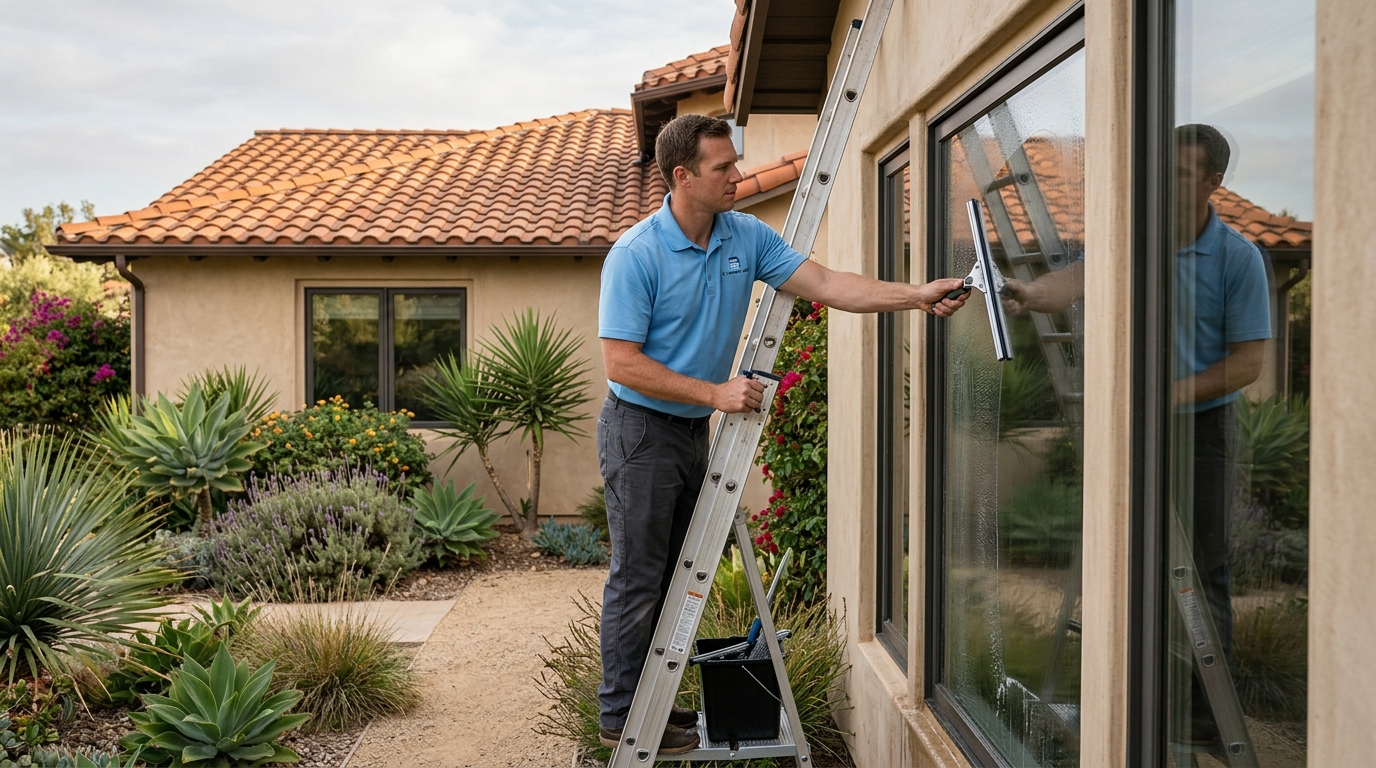
The key to streak-free windows is a squeegee and a clean microfiber applicator, not paper towels and circular scrubbing. Apply a thin, even coat of solution, pull the squeegee from one corner in overlapping strokes, and wipe the blade dry between each pass. That’s the method. Everything else is detail.
Here’s the detail, including why most DIY attempts fail and what San Diego’s specific conditions change about the process.
Why streaks happen in the first place
Most window streaks come from one of three mistakes. The first is using paper towels or newspaper. Both leave behind fibers and lint, especially on double-pane glass with a low-e coating. The second is wiping in circles. Circular motion moves the dirty solution around the glass instead of off it. The third is using too much cleaning solution. Thick soapy residue dries before you can wipe it away, and every wipe just smears it further.
San Diego adds a fourth problem: the sun. If you’re cleaning on a warm afternoon with glass in direct sunlight, your solution evaporates before you finish each stroke. The minerals in the water, or the soap residue, bake onto the pane before you get a chance to squeegee it off. Morning cleaning, when the glass is cooler and the sun isn’t beating on it, fixes this almost entirely.
What you actually need (and what to skip)
Squeegee. A 10-inch or 14-inch squeegee with a fresh rubber blade. A worn blade with nicks or curled edges will streak even with perfect technique. Blades are cheap. Replace them when you notice drag or lines.
Microfiber applicator or sleeve. This is what you load with solution and use to wet the glass. It holds liquid without dripping and won’t scratch the pane. A car-wash sponge works in a pinch. A scrub brush for heavy buildup works well too.
Cleaning solution. A few drops of dish soap in a bucket of water is genuinely what most pros use. Diluted properly, it cuts grease and grime without leaving a film. Commercial window cleaners work fine too. What you don’t want is a product with wax or polish additives, which haze the glass. Avoid vinegar on tinted glass or low-e coatings. Our post on the best glass cleaner for windows covers solution options in more detail.
A few clean microfiber cloths. For wiping the squeegee blade, detailing the edges, and catching drips. Cotton rags will leave lint. Paper towels make things worse.
What to skip: spray bottles for large windows, paper towels, and anything with “streak-free shine” printed on a label that also lists wax or polymer compounds.
The squeegee technique, step by step
This is the part that most DIY guides skip or describe badly. Technique matters more than product.
Step 1. Rinse the glass first if it’s visibly dirty. A quick rinse with plain water removes loose dust and grit so you’re not dragging abrasive particles across the pane.
Step 2. Wet the glass fully with your applicator loaded with solution. Cover the whole pane evenly. Don’t be stingy, but don’t soak it either. You want a thin, uniform layer.
Step 3. Start the first squeegee stroke in the top corner. Hold the squeegee at about a 30-degree angle to the glass and pull horizontally across the top. Keep consistent pressure. At the end of the stroke, angle the squeegee slightly so water runs down, not back onto clean glass.
Step 4. Wipe the blade dry with your microfiber cloth. Every stroke. This is the step people skip, and it’s why they get streaks. A blade carrying dirty water from the previous stroke drags it right back onto the glass.
Step 5. Overlap each horizontal stroke by about an inch. Work down the pane in parallel passes. Keep the blade dry between each one.
Step 6. When you finish the main pane, run a dry microfiber cloth around the edges to catch any solution that pooled in the corners or on the frame.
A helpful visual: picture the glass in rows like a mower pattern. You’re pulling each row off cleanly rather than mixing them together.
San Diego specifics that change the process
San Diego’s water is moderately to severely hard depending on where your supply comes from. That means high dissolved mineral content, primarily calcium and magnesium, that shows up as white spotting when water evaporates on glass. Tap water for your cleaning solution can leave spots even if your technique is perfect. Two fixes: use filtered or purified water, or rinse with it as the final step.
Coastal homes in La Jolla, Del Mar, Pacific Beach, Encinitas, and Carlsbad face a second problem on top of hard water. Salt-laden marine air deposits a fine invisible film on glass that bonds over time into a hazy layer. A standard dish-soap solution doesn’t fully dissolve salt film. You need to scrub a bit harder with the applicator and consider a rinse of diluted white vinegar to break the mineral-salt bond before you squeegee. This works for light salt buildup. For heavier deposits or glass that’s been neglected for a season or two, you’re into hard-water mineral removal territory that DIY solutions won’t touch.
The marine layer also matters. San Diego’s coastal morning fog leaves a thin film of moisture and particulate on glass that isn’t visible until it dries. Cleaning right after the marine layer burns off, usually late morning, means you’re cleaning glass that’s dry but before the afternoon heat speeds evaporation.
Inland neighborhoods like El Cajon, Santee, and Poway have less salt but more dust and dry debris. The process is the same. The main adjustment is a longer initial rinse to clear dust before you scrub.
The right order of operations for a whole house
If you’re cleaning multiple windows in one session, work in the right sequence.
Start on the shaded side of the house, or start early before sun hits any side. Work top to bottom, upper floors first. Clean the exterior before the interior so you’re not laying a hand on clean inside glass to reach outside. Pull screens before you start and clean them separately rather than cleaning around them. Our screen cleaning service page explains why cleaning glass behind a dirty screen is just moving the problem.
Clean tracks and sills after the glass, not before. You’ll loosen debris while you’re wiping, and it will land on your clean pane if you haven’t done it yet. A stiff brush or old toothbrush in the track, followed by a vacuum, then a damp cloth wipe works well. Or our window track cleaning service handles it as part of a full visit.
When DIY makes sense vs. when to call a pro
DIY window cleaning makes complete sense for single-story homes, accessible ground-floor windows, and glass in decent condition with light buildup. If you have the right tools, good technique, and cooler morning conditions, you’ll get results that look genuinely clean.
A few situations are better handled professionally. Anything above the first story where you’d be on a ladder. Any glass with hard-water mineral etching, which is white spotting that doesn’t wipe off, that requires an oxalic-acid or cerium-oxide treatment you’re unlikely to have at home. Coastal glass that’s been accumulating salt film for a year or more. Commercial storefronts with high-reach glass or specialty coatings. And any glass where the seal has failed and the haze is between the panes, which no exterior cleaning addresses.
For recurring upkeep, many San Diego homeowners find a quarterly professional clean easier than quarterly DIY sessions, particularly on coastal properties where salt film is constant. Our maintenance plans cover recurring glass care at a lower per-visit cost than one-off bookings. If you’re weighing the math on that, our post on how often to clean windows in San Diego has the full breakdown by home type and location.
For a wider view of where DIY window cleaning holds up versus where it doesn’t, our DIY vs. professional window cleaning comparison covers the honest tradeoffs by home type and glass condition. If you want help anywhere in San Diego County, call us at (858) 925-5546 and we’ll give you an upfront quote before we touch the glass.
FAQ
What is the best way to clean windows without streaks?
Use a squeegee, not paper towels. Apply a thin coat of diluted dish soap or window cleaner with a microfiber applicator, then pull the squeegee in horizontal overlapping strokes from the top down. Wipe the blade dry between every stroke. Clean in the morning before direct sunlight hits the glass, which causes streaks by making the solution evaporate before you finish each pass.
Why do my windows streak even after I clean them?
The most common causes are paper towels leaving lint, circular wiping that moves solution around instead of off the glass, a worn squeegee blade with nicks or curled edges, or cleaning in direct sun. In San Diego, hard-water mineral residue in your tap water can also leave spots even with good technique. Try using filtered or purified water for your solution and rinse.
Does vinegar clean windows streak-free?
Diluted white vinegar works on light mineral deposits and salt film, and it rinses clean without residue. It’s a reasonable solution for occasional cleaning. Avoid it on tinted glass and low-e coatings, where it can damage the film over time. For heavier hard-water spots, a commercial oxalic-acid-based remover is more effective than vinegar.
How do I clean windows in San Diego’s hard water without spots?
Use purified or filtered water for your cleaning solution rather than tap water, or rinse with it as the final step before the glass dries. San Diego tap water has enough dissolved minerals that evaporation leaves visible spotting even on well-cleaned glass. For glass with existing hard-water etching, spots that don’t wipe off, that requires a separate hard-water removal treatment.
Can I clean windows in the sun?
It’s possible but harder. Sun-warmed glass makes your cleaning solution evaporate mid-stroke, leaving streaks and residue before you can squeegee it off. Aim for early morning when glass is cool and shaded, or work in the shade whenever you can. On hot San Diego afternoons, even good technique struggles.
How often should I clean my windows?
Most San Diego homes do well with a thorough clean twice a year. Coastal homes within a mile or two of the water, where salt film and marine layer buildup are constant, benefit from quarterly cleaning. Inland homes with heavy tree cover or sprinkler overspray may need the same. If your glass looks hazy two or three months after cleaning, the interval is too long for your conditions. Our window cleaning service in San Diego page covers what a professional visit includes if you want to compare.