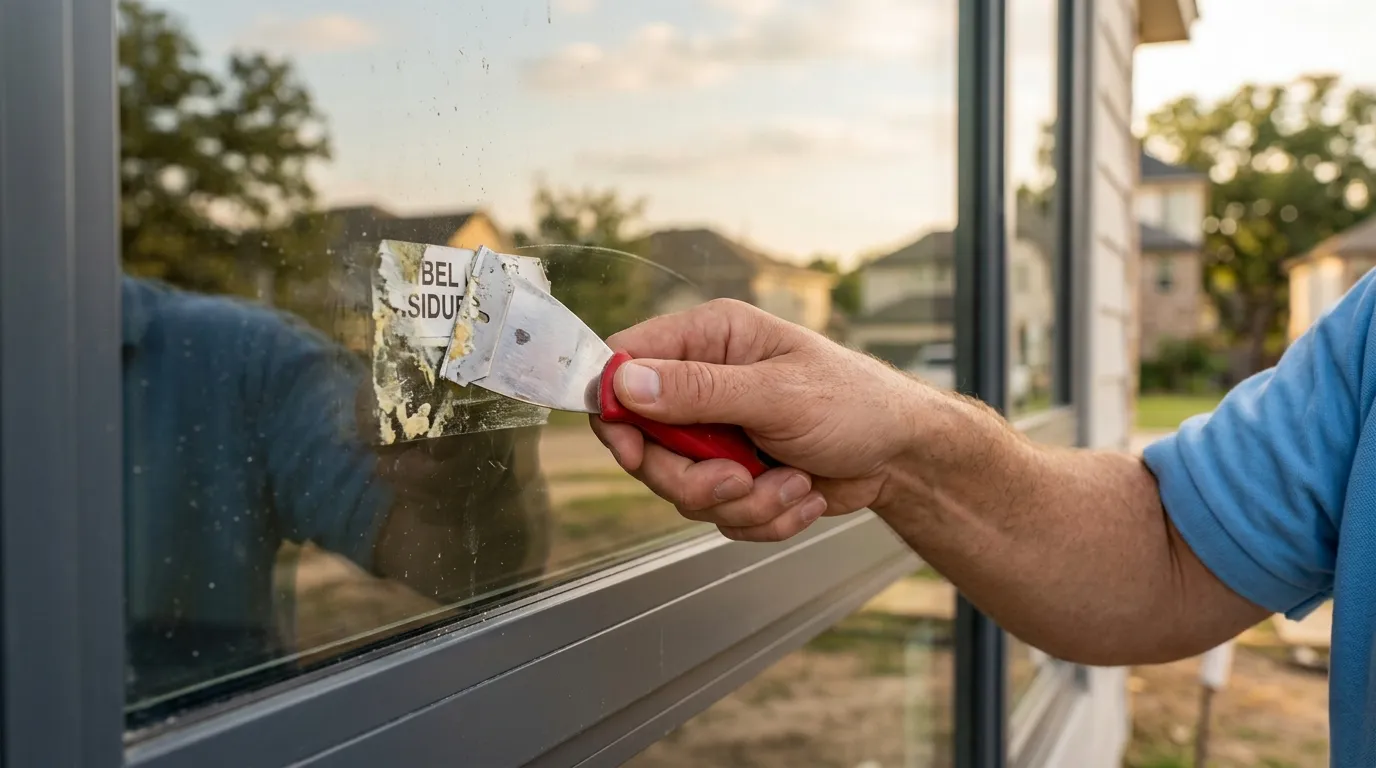
Warm soapy water plus a razor blade held at a 45-degree angle removes most sticky residue from glass without scratching. For stubborn adhesive, isopropyl alcohol or a small amount of cooking oil breaks the bond before the razor goes on. The key is keeping the blade flat, the glass wet, and your patience ahead of your frustration.
Here’s the full method by residue type, what not to do, and when the job is better left to a pro.
Why sticky residue sticks in the first place
Adhesive is engineered to bond. Sticker labels on new windows, tape from painters and contractors, suction-cup marks from shower organizers, tree sap, and decals all use different adhesive chemistry. What they share is this: once the adhesive dries out or heats up in the San Diego sun, the bond tightens against the glass surface.
Dry adhesive is the harder removal problem. Fresh sticker residue peels off with your thumbnail and a damp cloth. Three-month-old contractor tape that cooked through a summer in Santee is a different job. Same methods, more patience.
The safe step-by-step for removing sticky residue
This sequence works on most standard glass, including double-pane windows, shower doors, and sliding glass doors. Read the caveats on tinted and tempered glass before you start.
What you need:
- Warm water and dish soap
- A fresh single-edge razor blade (not a worn one)
- Isopropyl alcohol, 70% or higher
- A clean microfiber cloth
- Optional: cooking oil, WD-40, or Goo Gone
The steps:
-
Soak the residue first. Wet the area with warm soapy water and let it sit for a minute. This softens the adhesive and lubricates the glass for the razor. Skipping this step is how scratches happen.
-
Try to peel with your fingers or a plastic card. A plastic scraper or old credit card removes fresh, soft residue without any risk to the glass. Only move to the razor if the residue doesn’t budge.
-
Hold the razor at 45 degrees, never steeper. Keep the glass wet. Push the blade forward in short strokes, always away from you. Don’t angle the blade up past 45 degrees, and never drag it sideways. The blade stays flat against the glass surface.
-
Wipe and check progress. Wet the glass again between passes. You’ll see the residue ball up and lift. Keep going until the surface feels smooth.
-
Apply alcohol for anything left behind. Isopropyl alcohol dissolves adhesive that the razor loosened but didn’t fully lift. Apply with a microfiber cloth, let it sit 30 seconds, and wipe.
-
Final clean. Wash the whole pane with soapy water and finish with a standard window cleaning pass to remove any oily residue.
When oil works better than alcohol
Some adhesives, especially suction-cup marks and older sticker glue, respond better to oil than alcohol. Cooking oil, baby oil, or WD-40 saturates the adhesive and weakens the bond through a different mechanism than dissolving it.
Apply a few drops, let it sit five minutes, and then wipe with a cloth. Follow immediately with dish soap to cut the grease, then rinse. If you skip the dish soap step, you’ll trade a sticky window for a greasy one.
Goo Gone and similar citrus-based products work on the same principle and are formulated to rinse cleaner. They’re a good option when you have multiple windows or a large adhesive area to cover.
Post-construction sticker residue in San Diego
New windows ship with large manufacturer labels and temporary protective film, both of which leave adhesive behind if they’re not removed correctly. In San Diego’s new construction zones, from developments in Otay Ranch and Rancho Santa Fe to custom builds in Encinitas and Carmel Valley, this is one of the most common calls we get after post-construction cleaning.
The adhesive from protective window film is thicker and covers more surface area than a standard sticker. The removal process is the same, but expect more razor passes and more alcohol. Let the soapy water soak longer on these, especially if the film has been on the glass for months through warm weather.
Contractor tape left on frames and sills is the other common offender. Blue painter’s tape is designed to release cleanly for a few days, but tape left on glass for weeks bonds harder. Same approach: soak, scrape at 45 degrees, alcohol finish. Our post-construction window cleaning guide covers what a full new-build window restoration typically includes.
What NOT to do
These are the common mistakes that scratch glass or damage coatings.
Don’t use a dry razor. This is the single most common cause of window scratches. The blade needs a wet, soapy surface to glide. A dry razor on dry glass drags and gouges.
Don’t use steel wool or abrasive scrubbing pads. Any pad marked “heavy duty” or with visible scratchy texture will leave fine scratches in the glass, which catch light and are permanent. Use microfiber only.
Don’t use ammonia-based cleaners on tinted glass. Standard glass cleaners like Windex use ammonia, and ammonia degrades window film over time. If your glass has an aftermarket tint or a factory solar coating, check the label before you spray anything on it. Use alcohol or plain soapy water instead.
Don’t use a razor on tempered glass without checking first. Most modern double-pane residential windows use tempered or heat-strengthened glass. Some tempered glass has microscopic surface imperfections from the manufacturing process that a razor can catch. If you’re unsure, test in a low-visibility corner first, and if you see fine scratches, stop and switch to the alcohol-only method.
Don’t scrub in circles. Circular scrubbing spreads the adhesive and embeds debris into the surface. Always work in straight, parallel strokes.
Residue on tinted glass and specialty coatings
If your windows have an aftermarket tint, a low-E coating, or a decorative etch, the residue removal process needs to change. No razor blades on tinted film. The blade will lift or nick the film. The right method here is warm soapy water and patience, isopropyl alcohol applied gently with a cloth, and nothing abrasive.
Hard-water spots and mineral etching look like sticky residue but aren’t. If you’ve cleaned the area and the haze remains, especially on older coastal-facing glass, it may be mineral etching, not adhesive at all. That needs an acid-based hard-water removal treatment, not a razor. We cover how to tell the difference in our guide to hard-water spots on San Diego windows.
When to call a professional
The DIY method works well on standard residential glass with accessible adhesive. A few situations make professional help the better call.
Multi-story windows, where a razor at height is genuinely risky. Large adhesive coverage from construction film across multiple panes. Tinted or specialty glass where you’re not sure what the coating is. Post-construction cleanup where the adhesive is one part of a larger job, including mineral deposits, paint overspray, and debris. For whole-home or post-build glass restoration, our residential window cleaning service includes adhesive removal as part of the scope.
If you’re not sure what you’re dealing with, a quick look before you reach for a razor is the better move. Call us at (858) 925-5546 and we’ll tell you whether it’s a DIY job or one worth having a pro handle.
FAQ
What is the safest way to remove sticky residue from glass?
Start with warm soapy water to soften the adhesive, then use a fresh razor blade held at 45 degrees with the glass kept wet. Follow with isopropyl alcohol to dissolve any remaining residue. This sequence removes most adhesive without scratching on standard non-tinted glass.
Can I use a razor blade on window glass without scratching it?
Yes, if you keep the glass wet, hold the blade at 45 degrees (not steeper), and use short forward strokes. A dry razor on dry glass scratches. A wet blade at the right angle glides. Never drag the blade sideways or at a steep angle.
Will WD-40 or cooking oil remove sticker residue from glass?
Yes. Oil-based products work by soaking into the adhesive and weakening its bond. Apply a small amount, let it sit for a few minutes, then wipe clean. Follow immediately with dish soap to cut the grease, otherwise you’ll leave an oily film on the glass.
Is it safe to use a razor blade on tinted windows?
No. Razor blades can nick or lift window film. If your glass has an aftermarket tint or visible film, use warm soapy water and isopropyl alcohol only. No abrasive pads, no scrapers, no razor.
How do I remove construction stickers from new windows?
New-window manufacturer labels and protective film adhesive respond to the same method: soak with warm soapy water, scrape with a razor at 45 degrees while the glass stays wet, then finish with alcohol. Expect more passes than a standard sticker, especially if the film has been on through warm weather. Our window cleaning service handles this as part of post-construction cleanup.
What if the residue won’t come off with a razor and alcohol?
Try an oil-based product like Goo Gone or WD-40 first, let it sit five minutes, then return with the razor. If the glass still has a haze after cleaning, it may be mineral etching rather than adhesive. Mineral deposits need a different treatment entirely. See our hard-water removal service for that scenario.